
Di Investor Relations, live quarterly reports on the Nordics' biggest business news site.
A complete investor relations video service for Di.se, designed across four products, two brands and five roles.
What if a newspaper could host every listed company's quarterly report?
Investors were moving from PDFs to video, and quarterly reports were turning into CEO interviews and live presentations. A Finnish platform already held a strong Nordic position. Dagens Industri had the audience, its own studios and the trust of listed companies, but not the technology. So we pitched a partnership: Di brings the audience and the brand, we build and run the service.
Research showed that neither the listed companies nor Bonnier wanted to run a technical platform themselves. That made it a service, not a tool: our team operates every broadcast.
"Covering listed companies and increasing transparency in the market is part of Dagens industri's core mission. With this initiative, we make Di an even better working tool for readers and subscribers."Translated from Swedish. Bonnier News press release.
Every broadcast has five kinds of people in it.
Book → Set up → Broadcast → Watch → ArchiveSeamless.
Behind the scenes the service runs on four products, two brands and five roles. To the people using it, it should feel like one thing. Every decision aimed to hide the seams.
Every role gets its own way in
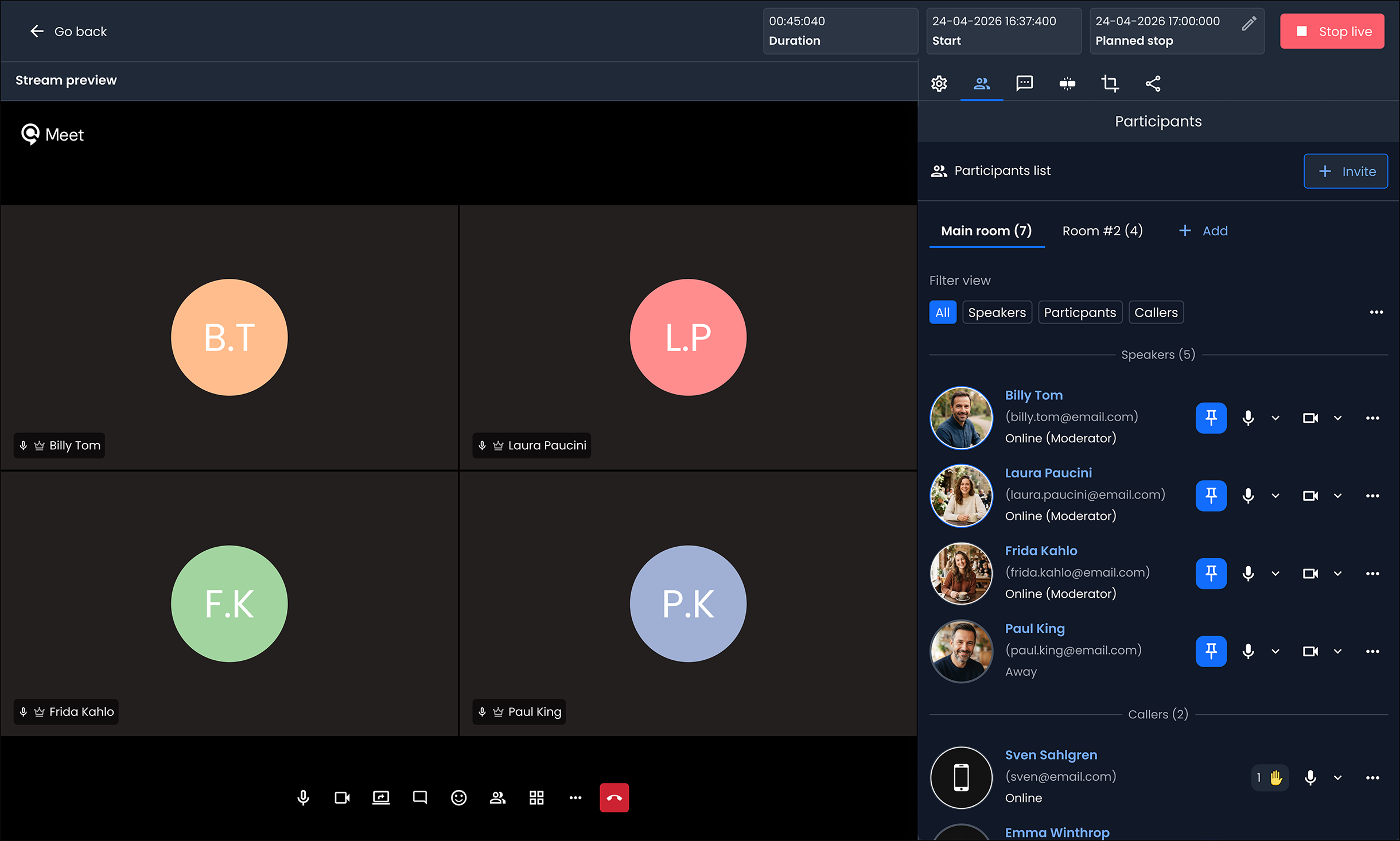
A CEO, an analyst and a reader have little in common beyond the broadcast. Instead of one shared meeting room, each role gets its own entry: speakers get a direct link, participants and callers sign up through a form, and viewers sign up next to the player. The operator sees everyone in one filterable list and can mute, unmute and move people between rooms.
Di in front, our design behind
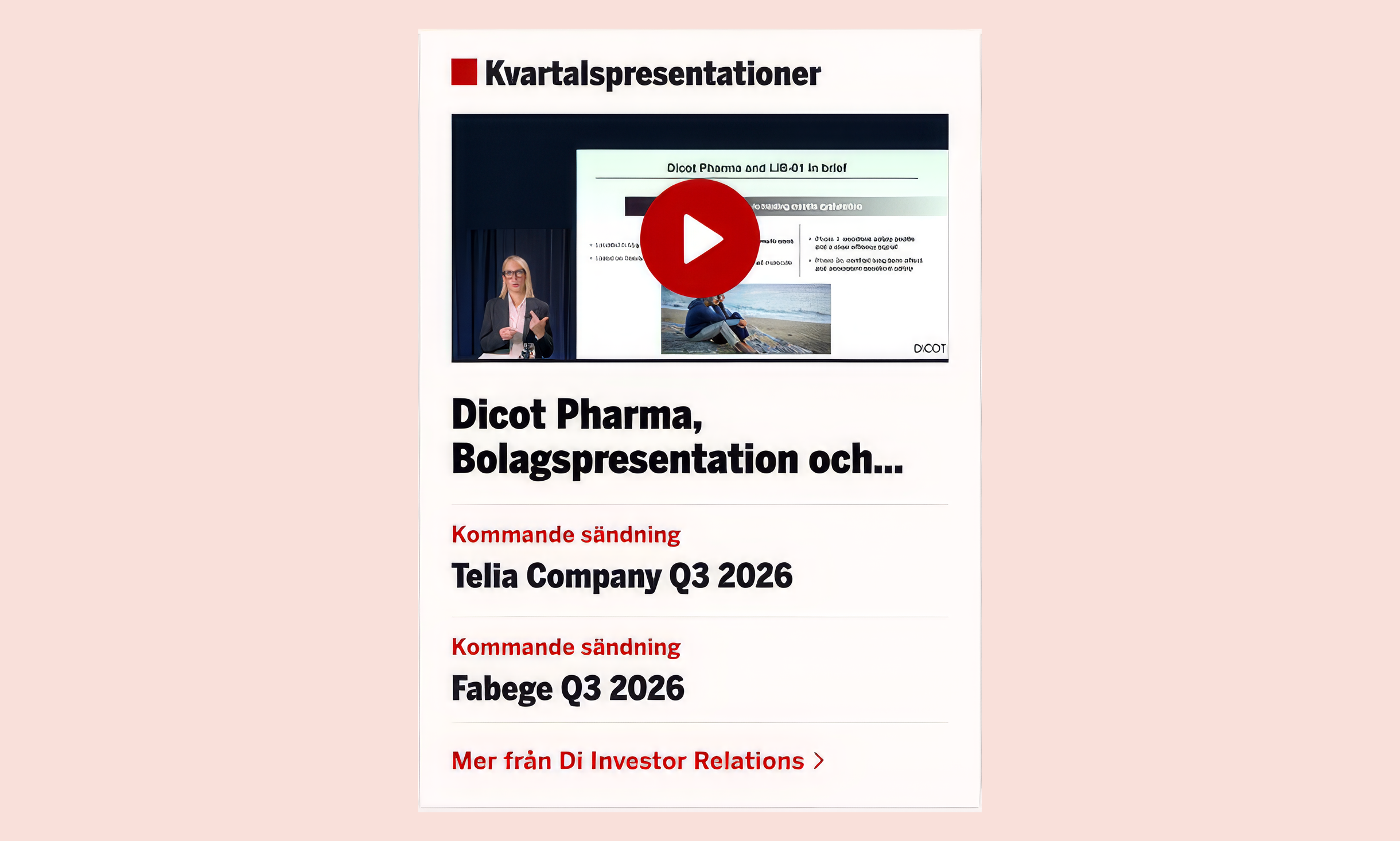
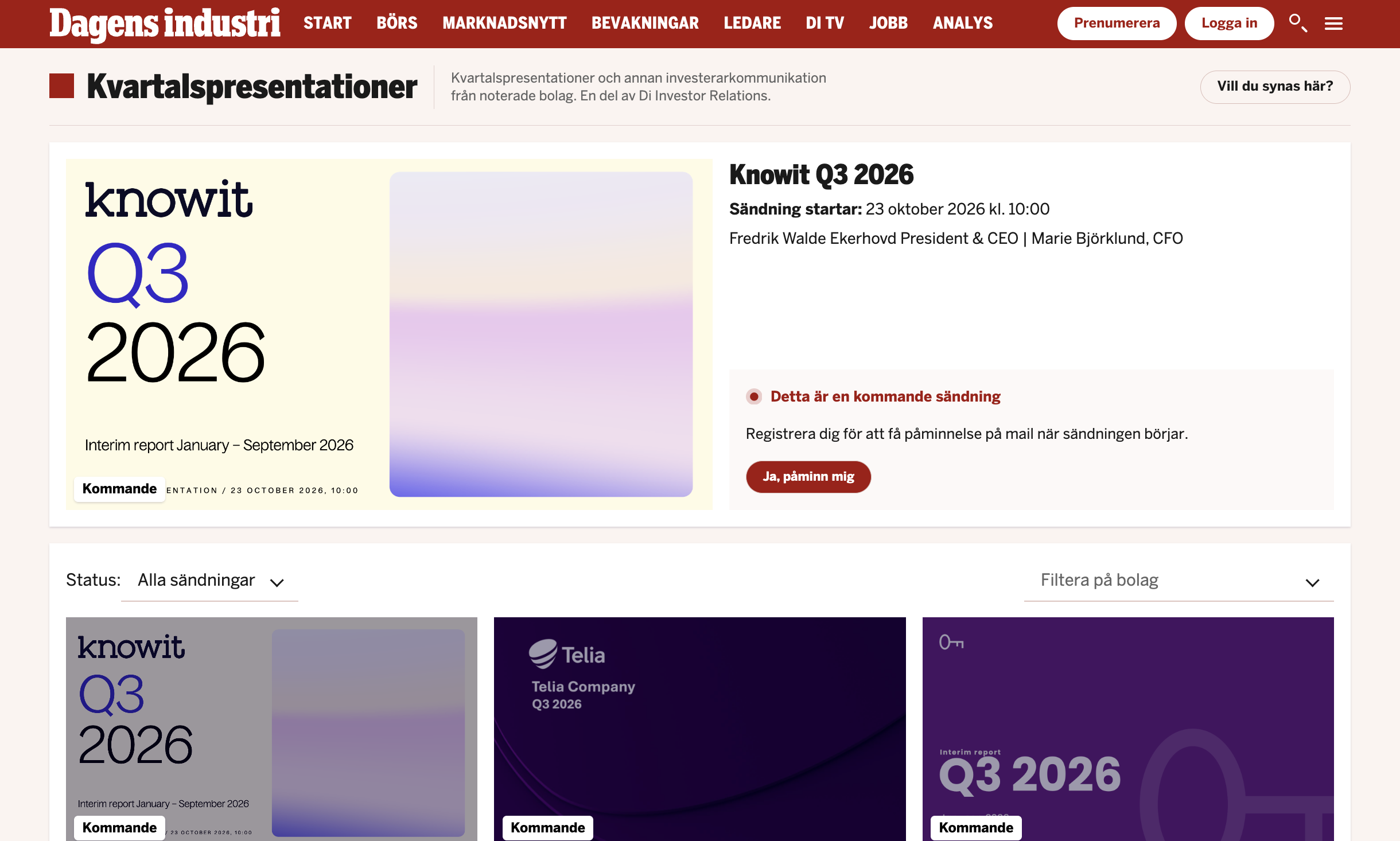
Readers should never notice that another company powers the video. Everything the audience sees is branded as Dagens Industri, while the operator tools stay on our platform. For nine months I rebuilt Di.se's design language component by component, and the final components match about 80% of the originals. Company channels add a second layer with each company's own logo and colours.
Build on whatever works
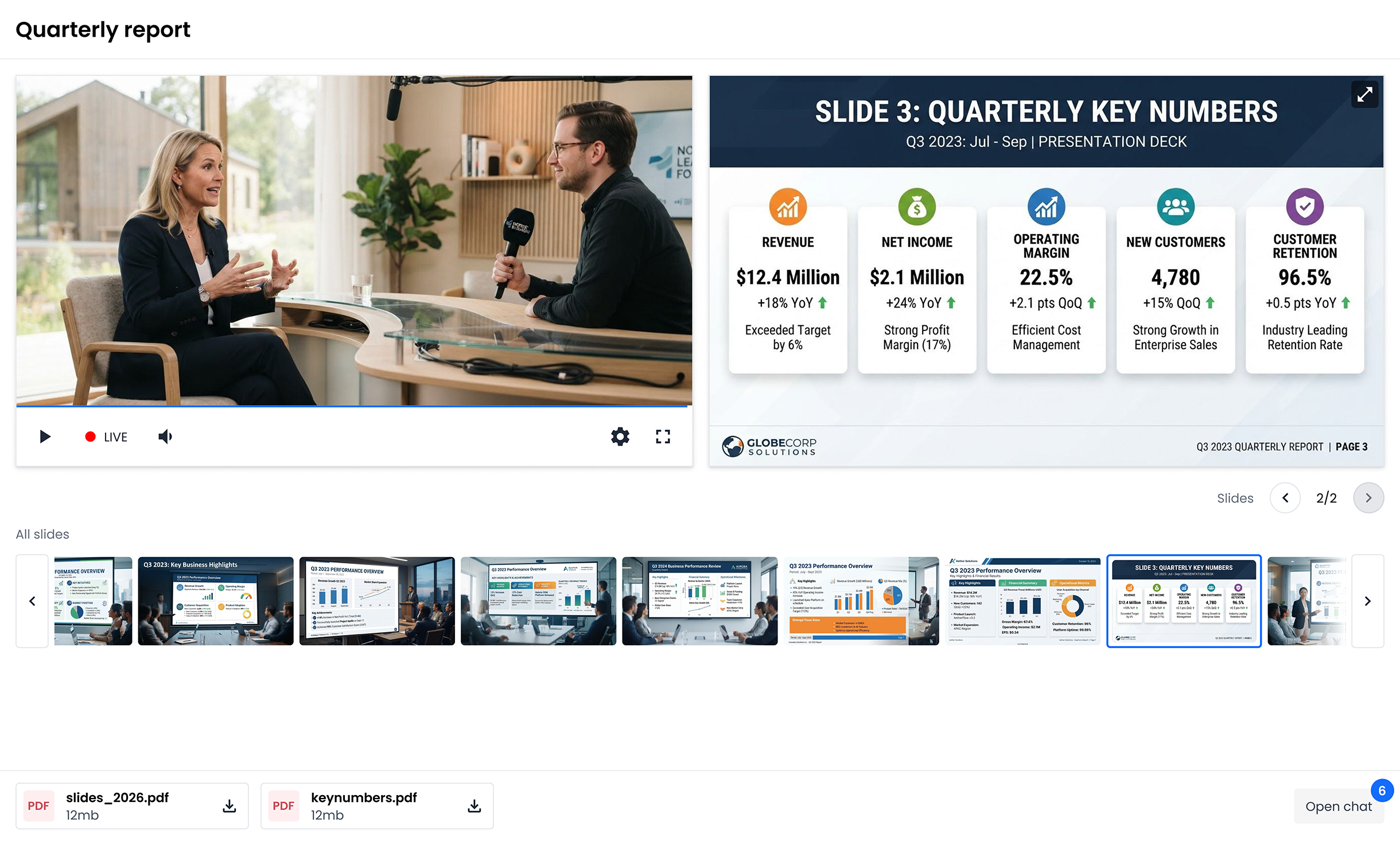
With one year and no webcast tool of our own, building a video meeting tool from scratch was not an option. We integrated Jitsi Meet and added our own layer: participants, moderation and slides. Slides live inside our video player, so the presentation works on any screen and anywhere the player is embedded.
Make every setup quick
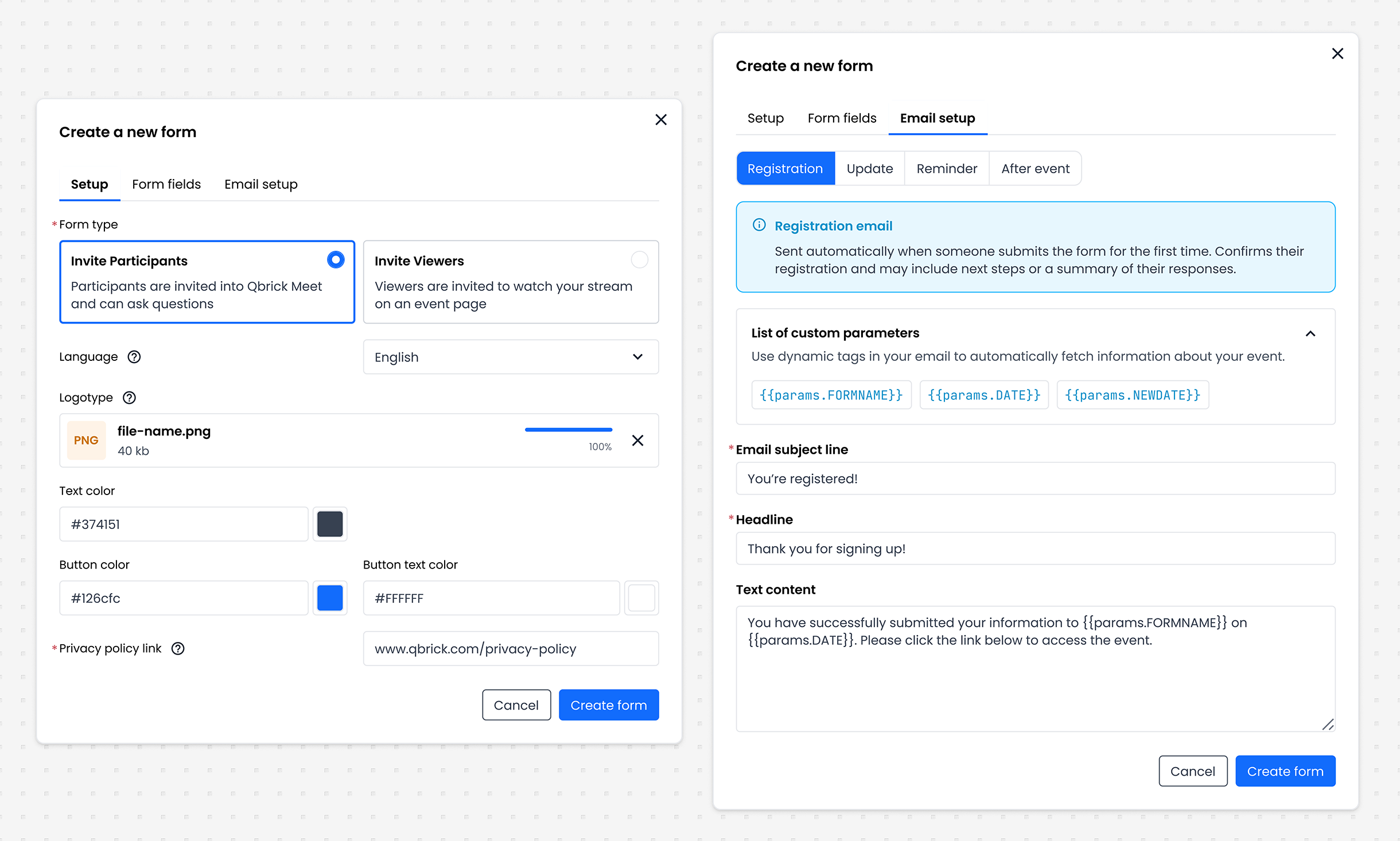
Every broadcast needs two forms and several emails, and the operator repeats it all every earnings season. Forms and emails come pre-filled with neutral text, one language picker translates every field at once, and dynamic tags fill in the event name and date.
What we left out
A creation wizard that would link every setup step together: creating the live event, adding forms, inviting speakers and uploading slides. It didn't fit the deadline. Since the operators were our own team, we accepted the extra clicks for version 1.
Live on Di.se one year after the pitch.
Web · Desktop, mobile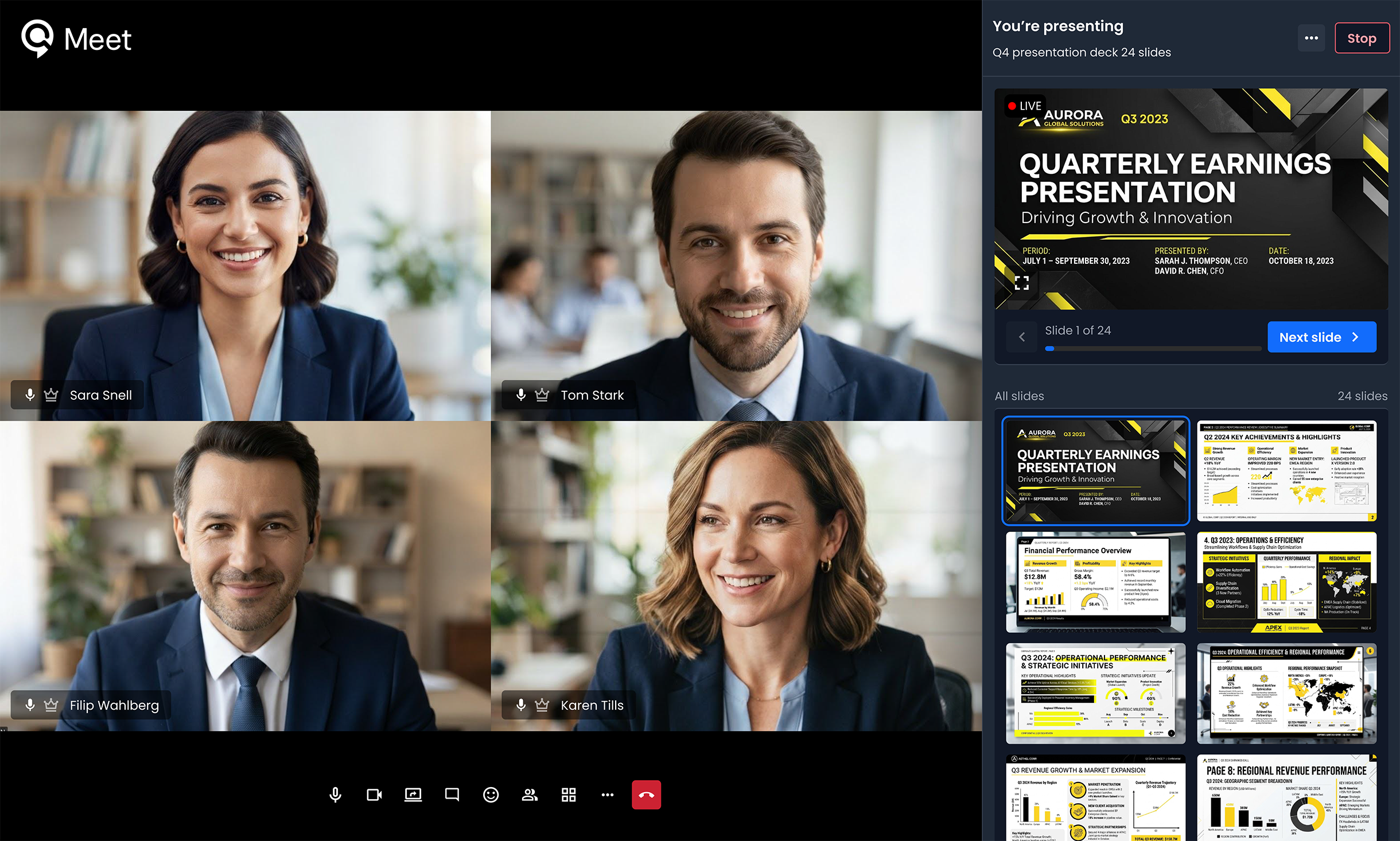
Cross-team projects need to be cross-team from the start.
Bonnier's team joined nine months into a twelve-month project, so new ideas and problems surfaced when there was the least time to act on them. In a partnership like this, both teams belong in the room from the very first design meeting.